The Promise, Proof, Next Step Formula for Posts People Save
A simple three-part structure that turns an ordinary post into one people save, share, and act on.

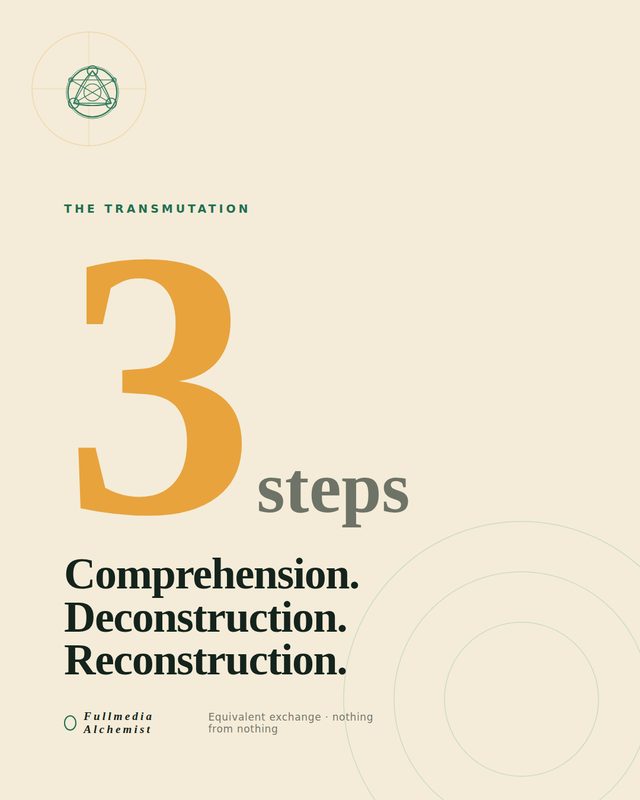
Most posts that get saved or shared are not clever. They just make a clear promise, back it up with proof, and tell you what to do next. Here is how to build that structure into anything you post.
Why this structure works
People scroll fast and decide even faster whether something is worth their time. A post that opens with a vague thought or a joke with no payoff gets skipped. A post that opens with a promise gives the reader a reason to keep reading. Proof tells them it is real, not just a claim. A next step tells them what to do with the three seconds of attention they just gave you.
You can use this on any format: a caption, a thread, a carousel, a video script, even a single image with a headline and three facts. The structure does not care about the network. It only cares about the order.
Part one: the promise
The promise is the first line. It states what the reader will get if they keep reading, or what problem you are about to solve. It should be specific enough that someone could picture the outcome.
- Weak: "Thinking about social media lately."
- Better: "Here is how to post three times a week without running out of ideas."
- Weak: "Some thoughts on pricing."
- Better: "Three signs your prices are too low, and how to raise them without losing customers."
Keep the promise to one sentence. If you need two sentences to explain what the post is about, the promise is not clear yet.
 Want this written for your brand?
Fullmedia Alchemist drafts posts from your own website and brand facts, so nothing is made up. Start free, no card.
Part two: the proof
Proof is the part that makes the promise believable. It does not have to be a statistic or a study. It can be:
- A short example from your own work or your customer's situation.
- A before and after, even a simple one like "used to take an hour, now takes ten minutes."
- A specific number you control, like "we tried five headlines and this one got the most replies."
- A reason that makes sense on its own, like "because people decide to keep reading in the first line, not the third."
Avoid inventing numbers or quoting sources you have not checked. If you do not have a real example yet, use reasoning instead: explain why the promise is true, plainly and honestly. That is still proof. It just comes from logic rather than data.
This is also the part where you can show the work, not just the result. A screenshot, a quick list of steps, or a short "here is what changed" line all count as proof, because they let the reader verify the claim instead of just trusting it.
Part three: the next step
The next step is one clear action. It can be small: save this, try this today, reply with your answer, follow for the next one. It should not be a list of five options. One action, stated plainly, is easier to act on than a menu.
- "Save this for your next content brief."
- "Try this on your next post and see what changes."
- "Reply with the one you use. I'll share results next week."
If you are promoting something, the next step can point there, but it should still feel like a natural continuation of the proof, not a sudden sales pitch.
Putting it together
Here is the same idea written three ways, short enough for a caption:
| Part | Example |
|---|---|
| Promise | "Stop losing followers in your first line." |
| Proof | "Most people decide to keep scrolling or stop within the first sentence. If that sentence is vague, they scroll past." |
| Next step | "Rewrite your next caption's first line so it states a clear outcome. Save this as a reminder." |
Notice the whole thing is three short pieces. You do not need more. Longer posts still follow the same shape, they just have more detail inside each part.
Reusing the structure across a week
Once you have the structure down, it becomes a quick way to check any draft before you post it. Read it back and ask: is the promise clear in the first line, is there something real backing it up, and does it end with one thing to do? If any part is missing, that is usually why a post feels flat.
This also pairs well with a weekly rhythm. If you already have a routine for planning posts, you can slot this structure into your 20-minute weekly routine as the quality check at the end, right before you schedule anything. And if you are short on raw material for the proof section, pulling details from your own blog posts is often faster than trying to invent an example from scratch.
How Fullmedia Alchemist fits
If you use the Content tool, you can ask it to draft posts from your brand facts and your own pages, then edit the result so it follows promise, proof, next step in your own words. The "what worked where" table can also show you which saved posts performed best, which is a fast way to see which promises actually land with your audience.
A few things to avoid
- Do not stack two promises in one post. Pick the strongest one and save the rest for next time.
- Do not skip the proof to save space. A promise with no backing reads as a claim, not a post worth saving.
- Do not end with "thoughts?" as your only next step. It is fine occasionally, but a specific action gets more response than an open question.
Once this structure is a habit, it gets fast. You will start noticing it in the posts you personally save and share, which is the best sign it works.
Turn your brand into a week of posts.
The Free plan includes 30 credits a month. No card.