Choosing a Social Media Tool? Seven Questions to Ask Before You Pay
Seven plain questions that show the real differences between social media tools before you commit: sources, approvals, brands, exports and mistakes.
Most social media tools look the same on the pricing page. The differences show up three weeks later, when an approver is waiting, a client wants a change, or you want to stop paying. These seven questions help you find those differences before you commit.
Where do the words come from?
Start with the most important question: what does the tool write from? Some tools write from a blank prompt every time. Others write from facts you give them once, such as your website, your tone, and the things you never say. The second kind makes fewer surprises, because the same facts shape every post.
Test it. Give the tool a brand and ask for three posts. Then check whether each post says something true about you that you did not type into the prompt. If the posts could belong to any business, you will spend your time rewriting them.
Who has to approve a post, and how?
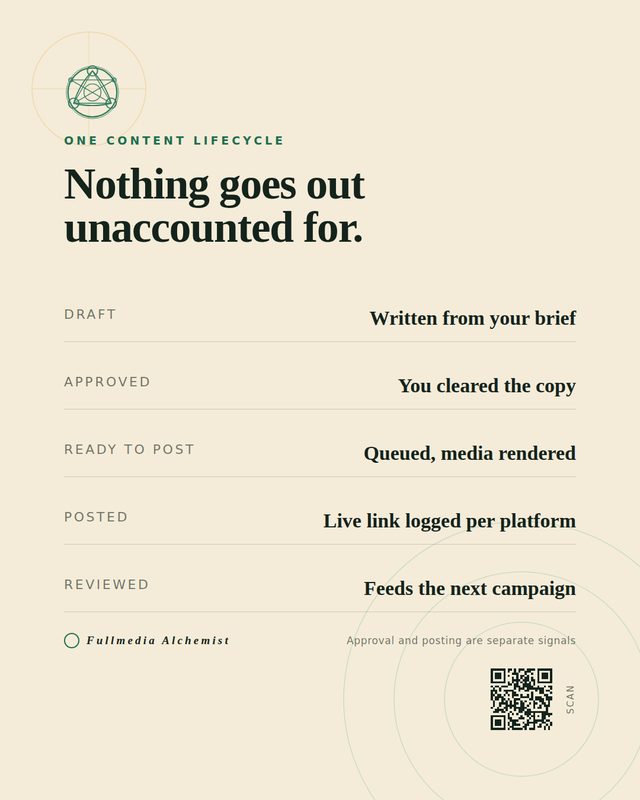
Write down the real approval path. Maybe it is just you. Maybe it is you, then the owner, then a client who replies two days later. A good tool lets a post sit in a clear "waiting" state, shows who is holding it up, and lets you edit without losing the history.
If approvals happen in email today, ask whether the tool can replace that, or whether it will add one more place to check.
How many brands will you run?
Count brands, not accounts. One brand can have five networks, and an agency can have ten brands. Ask how the tool keeps each brand's voice, logo and never-say list separate, and what happens when you switch between them in the middle of a busy day.
 Want this written for your brand?
Fullmedia Alchemist drafts posts from your own website and brand facts, so nothing is made up. Start free, no card.
What happens when you stop?
Ask this before you pay, not after. Can you export your posts and your brand settings? What happens to scheduled content? Is there a free tier you can drop down to, or does everything lock? A tool you can leave easily is a tool you can try honestly.
How are mistakes caught?
Every tool that writes for you will sometimes get a detail wrong. What matters is whether a person sees the post first. Look for a review step that is hard to skip, and for settings that stop the tool from stating things you have not supplied. If a tool posts for you automatically, ask what the undo is.
What does one week of real use look like?
Do not judge a tool by its demo. Pick one real task, such as next week's posts for one brand, and do it start to finish. Note how long it took, how many edits you made, and how many times you got stuck. Do the same task in the second tool you are considering and compare the notes, not the feelings.
Write your answers on one page
Make a simple table with one row per question and one column per tool. Score each cell as good, fine, or a problem. Any problem on approvals, exports or fact-checking should count for more than a nice design. Then choose the tool whose problems you can live with.
A note on free plans
A free plan is not a trap, but it is a test. Use it to find the limits that matter to you: how many posts, how many brands, and what is locked. If the free level lets you run a real week of work, you can decide on evidence instead of on a sales page.
Also check how the tool describes its own limits. A clear page that says what it will not do is a good sign. A page that promises everything is a reason to ask more questions.
Whatever you pick, start on the free or trial level and run a real week before you move your whole workload.
Turn your brand into a week of posts.
The Free plan includes 30 credits a month. No card.