The Day One Checklist for Onboarding a New Social Media Client
A simple checklist for collecting brand facts, access, goals and approvals before you write a single post.
The first week with a new social media client sets the tone for the whole relationship. Skip a step on day one and you will be chasing passwords, logos or sign-off two weeks later, right when you should be posting.
Why day one matters more than it seems
Most friction with a new client does not come from bad ideas. It comes from missing information: nobody has the Instagram password, nobody told you the brand never discusses pricing publicly, nobody said who actually approves posts. A short, structured onboarding call fixes most of this before it becomes a problem. Treat it like a checklist, not a chat, and work through it in order.
Brand facts to collect
You cannot write in a brand's voice if you do not know what that voice is. Ask for these before you draft anything:
- Website link and any existing brand guide, however informal
- Three words that describe how the brand should sound (friendly, direct, formal, playful)
- Three things the brand should never say or imply
- Logo files and brand colors
- Who the brand serves, in plain language, and what problem it solves for them
- Any past posts that worked well, and any that caused a problem
If the client cannot answer the voice question off the top of their head, a short exercise helps. See Define Your Brand Voice in Ten Minutes for a quick way to get three words and three nevers out of a founder who has never had to articulate it.
 Want this written for your brand?
Fullmedia Alchemist drafts posts from your own website and brand facts, so nothing is made up. Start free, no card.
Access to request
Access requests are the most commonly forgotten step because they feel administrative, but delays here stall everything downstream. On day one, ask for:
- Admin or editor access to each social account you will manage
- Access to any scheduling or publishing tool already in use
- A shared drive or folder for logos, product photos and past creative
- Login details for the website or blog, if you will pull posts from it
- Contact details for anyone else on the client side who might also post or comment
Write down who owns each login. If the client's social accounts were set up by a former employee or agency, confirm the client actually has recovery access before you rely on it. It is also worth a quick read of Your account, locked down so you can advise the client on two-step sign-in if they are not already using it.
Goals to agree on
A goal is not "post more." It is a specific outcome tied to a timeframe and a way to check progress. Agree on:
- The main goal for the next 30 to 90 days (awareness, leads, event turnout, community growth)
- Which one or two networks matter most, rather than trying to be everywhere equally
- How posting frequency will work day to day. If this has not been decided, How often should a small brand post? is a good starting point for the conversation
- What a good result looks like to the client, in their own words, not just impressions or likes
- Any dates that matter: launches, events, seasonal pushes
Write the goal down somewhere both sides can see it. A one-line goal statement with a date range avoids the slow drift where the client expects one thing and you are delivering another.
Approvals to set up
Decide the approval process before the first post is drafted, not after someone is annoyed by how long it took. Cover:
- Who has final sign-off on captions and images
- Whether posts need approval every time, or only for sensitive topics
- Turnaround time you can expect for a review (same day, next business day)
- What happens if nobody responds by the posting deadline: does it go out, or wait
- Any topics that need an extra layer of caution. If the brand touches alcohol, gambling, crypto, supplements, cannabis or CBD, read the posting rules that matter and posting about cannabis or CBD without getting flagged before you commit to a schedule, since these categories often need extra review time
If the client has legal or compliance requirements around disclosures or claims, that is a conversation for their own counsel. Your job as the social lead is to flag when something looks like it needs that review, not to make the call yourself.
Turning the checklist into a working brief
Once you have brand facts, access, goals and approvals, consolidate them into one document the client can glance at later. A content brief template saves you from rebuilding this structure for every new client: see A one-page content brief for social posts for a copyable format.
How Fullmedia Alchemist fits in
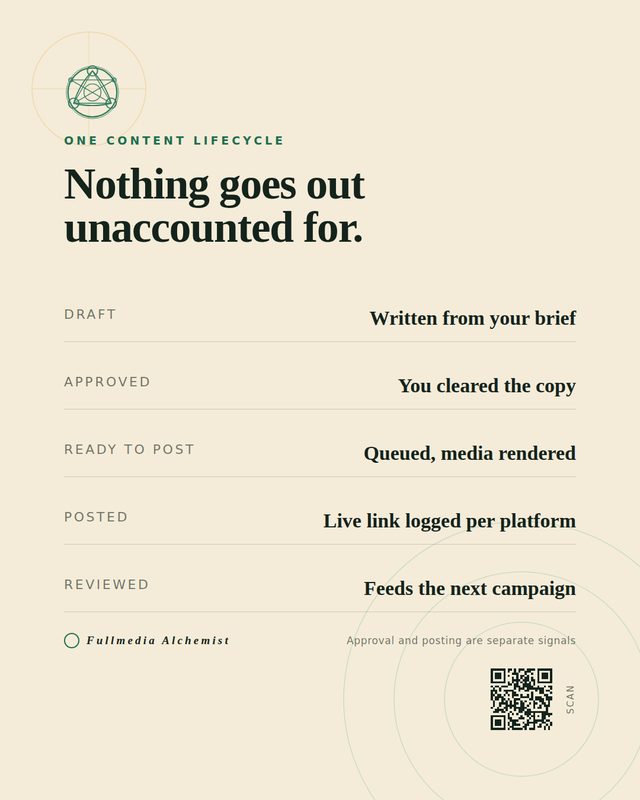
Once you have the brand facts, access and brand settings in hand, you can enter them into Fullmedia Alchemist once per client: website link, brand facts, tone, things to never say, logo and colors. From there the Content tool writes captions fitted to each network and picture cards in the brand's look, and you review and approve before anything goes out.
A simple day one table
| Category | Ask for |
|---|---|
| Brand facts | Website, voice words, nevers, logo, colors, audience |
| Access | Social logins, scheduling tool, shared drive, website login |
| Goals | Main goal, priority networks, posting frequency, key dates |
| Approvals | Sign-off owner, turnaround time, fallback plan, sensitive topics |
Keep this checklist somewhere you can reuse it for every new client. The specifics will change, but the four categories do not, and a consistent intake process is what makes the first month with a new client feel calm instead of chaotic.
Turn your brand into a week of posts.
The Free plan includes 30 credits a month. No card.