Write a Bio and Link That Tell Visitors What To Do in Five Seconds
A simple formula for your social bio and link page so new visitors know who you are and what to click, fast.

Someone lands on your profile, reads for about five seconds, and either clicks or leaves. Your bio and link are the only sales pitch that gets that short.
Why five seconds is the real budget
A new visitor rarely reads your posts first. They check your profile picture, scan the bio, and look at the link. If none of that answers "what is this and why should I care," they scroll on. You are not writing a biography. You are writing a sign on a door: what's inside, and where to walk in.
This matters more than people think, because most profile visits come from somewhere else: a shared post, a comment, a mention, a search. The visitor has no context except what you put on that page right now.
The three-line bio formula
You don't need clever. You need clear. A bio that works in five seconds usually has three parts, in this order:
- What you do, in plain words. Not your mission statement. The actual thing: "I make small-batch hot sauce," "We build websites for dentists," "Marketing tips for solo founders."
- Who it's for, if it's not obvious. One phrase is enough: "for home bakers," "for 1-person agencies," "for new parents."
- What happens if they click. This is the part most people skip. Tell them: "shop here," "free guide below," "book a call," "latest posts."
Three lines, no paragraph breaks needed. If your bio has a joke, a quote, and three emoji but no sentence that says what you actually sell or share, rewrite it.
 Quick test
Read your current bio out loud to someone who has never heard of your brand. If they can't tell you what you do and what to click within five seconds, it needs work.
Want this written for your brand?Fullmedia Alchemist drafts posts from your own website and brand facts, so nothing is made up. Start free, no card.
What your link should actually point to
The single biggest mistake is linking to your homepage when the visitor came for one specific reason. A homepage makes someone work to find the thing they wanted. Match the link to the most common reason people show up:
- If people mostly come to buy, link straight to your shop or your best-selling product, not a general catalog page.
- If people come to learn, link to your newest or most useful post, not your full blog archive.
- If you're building an audience before you sell anything, link to your email signup or a single "start here" page.
- If you juggle several goals at once, use a link-in-bio page with two or three clearly labeled buttons, not ten.
Whatever you choose, keep it current. A link that points to a sale that ended months ago, or an old lead magnet you retired, costs you every visitor who clicks it and hits a dead end.
Match the bio to the network
Each network treats bios a little differently, but the five-second rule holds everywhere. A few practical notes:
- Instagram and TikTok bios get scanned fast and the link is usually the only clickable one you have, so make it count.
- LinkedIn visitors are often checking credibility before a meeting or a connection request, so a clear role and what you help with matters more than a sales pitch.
- X and Threads bios are often read alongside your most recent posts, so they can be a little shorter since your pinned post can carry more detail.
- Pinterest and Facebook visitors are often mid-search for something specific, so naming the category you serve helps more than a clever tagline.
If you're also thinking about how your actual posts read once someone does follow you, the ideas in Write Captions That Sound Like You, Not a Robot and Define Your Brand Voice in Ten Minutes pair well with a tightened bio, since tone should match across both.
A short checklist before you save changes
- Write one sentence: what you do, for whom.
- Add one line on what happens when they click.
- Pick a link that matches the main reason people visit right now, not six months ago.
- Remove anything that doesn't help a stranger decide in five seconds: inside jokes, vague mottos, outdated event mentions.
- Read it back as if you've never seen your brand before. Fix anything that makes you pause.
- Check the link actually works and lands where you expect, on both desktop and phone.
Revisit this every few months, especially after a launch, a rebrand, or a shift in what you're promoting. A bio that was perfect for last quarter's offer can quietly become the thing that loses new visitors today.
Keep the rest of your profile consistent
A sharp bio does less work if your pinned post, your profile photo, or your most recent content contradicts it. If your bio says "daily recipe tips" but your last post was three months ago, fix the posting gap too. A steady rhythm backs up what the bio promises. If you're short on time for that, A 20-Minute Weekly Social Media Routine is a reasonable place to start, and if you're unsure how often is enough, How Often Should a Small Brand Post? covers that question directly.
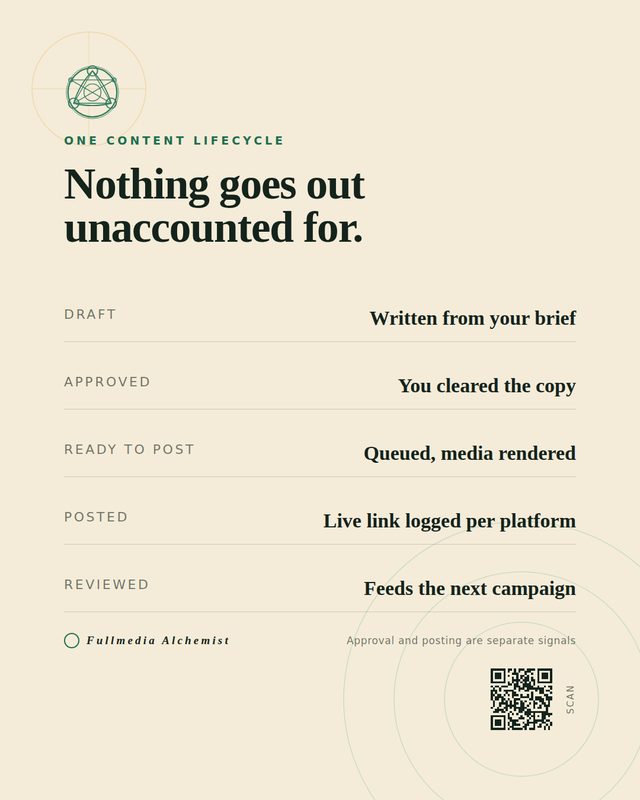
If you use Fullmedia Alchemist, your brand facts (website, tone, logo, colours) already live in your brand settings, so the picture cards and captions it writes will carry the same clear "what you do, for whom" message your bio should have, keeping your profile and your posts aligned without extra rewriting.
Turn your brand into a week of posts.
The Free plan includes 30 credits a month. No card.